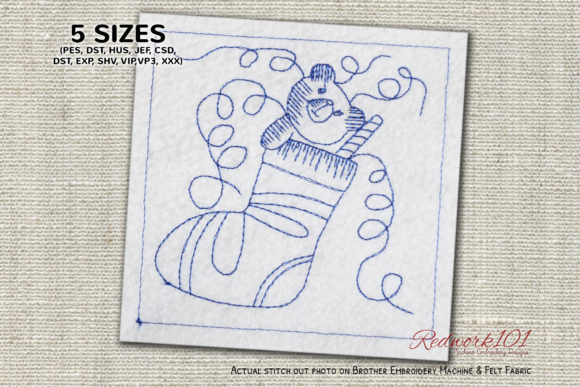
Christmas Stocking and Bear Redwork: A Professional Design Review
As a designer specializing in branded embroidery, my primary lens is commercial viability. When evaluating a design like Christmas Stocking and Bear Redwork, I’m looking beyond its decorative charm to assess its robustness as a small business merch asset. This piece, with its inherent narrative of warmth and tradition, presents intriguing possibilities for businesses looking to add a personal, festive touch to their customer-facing products.
Initial Impressions: Visual Personality and Brand Fit
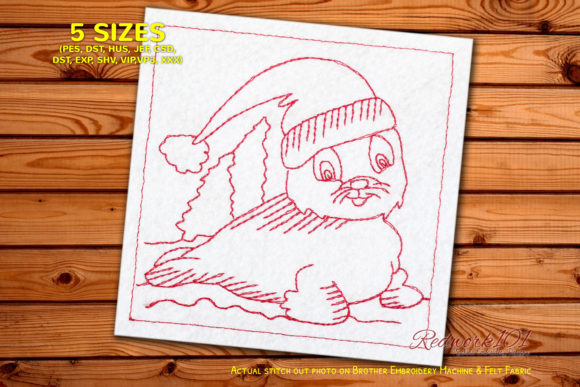
The first impression of Christmas Stocking and Bear Redwork leans heavily towards a handmade and rustic aesthetic. The term “Redwork” suggests a classic, often single-color embroidery style, which inherently feels approachable and nostalgic. For a boutique, bakery, café, or creative studio that champions artisan values, this design could visually reinforce that brand identity. It feels friendly and playful rather than corporate or starkly modern. However, its strength lies in this specificity; it’s not a generic logo but a scene, which means it should be used as an accent or secondary brand mark, not as a primary corporate emblem.
Performance in Real-World Business Applications
For practical commercial embroidery, we need to project this digital embroidery file onto real products. Its application across typical custom apparel is promising but requires strategic placement.
For embroidered patches, this design could be excellent. A patch offers a contained, premium feel. Applied to a tote bag or an apron, a Christmas Stocking and Bear Redwork patch immediately signals a seasonal, thoughtful brand. As a sleeve detail on a staff uniform or a subtle accent on a work shirt for a holiday promotion, it adds personality without overwhelming the main branding.
Cap embroidery on the front panel is possible, but careful sizing is critical. The bear and stocking elements need clear definition. As a tote bag design, it would work well as a centered, medium-sized motif, enhancing the bag’s value as a handmade product or customer gift. For a bakery or florist, embroidered directly onto apron embroidery, it creates a cohesive, festive staff look during the holiday season.
Think also of product packaging accents. A small embroidered label featuring this design on a gift box or product pouch from an Etsy shop or craft business adds a tactile, premium touch that elevates perceived value and buyer engagement. For event merch or as a customer gift item like a branded handkerchief, its thematic nature is a direct fit.
Critical Considerations for Production and Placement
Success depends on meticulous preparation. Key areas require careful attention.
- Small Patch Sizes: If you shrink this design down for a tiny patch or label, test extensively. The bear’s details and the stocking’s form must remain recognizable. High stitch density in a small area can lead to a stiff, puckered result.
- Cap Fronts and Curved Surfaces: The curvature of a cap can distort flat designs. A simplified version or ensuring the design is not overly wide is advisable.
- Fabric Texture and Dark Uniforms: On textured fabrics like some bag materials or on dark uniforms, thread color contrast is paramount. The “Redwork” description suggests a potential single-color use, which on dark backgrounds would need to be a very light or bright thread for visibility.
- Items for Frequent Washing: For staff uniforms or aprons that undergo regular laundering, a robust stitch construction and proper stabilizer during embroidery are non-negotiable to maintain integrity.
Essential Designer Pre-Production Checklist
Before running any production, I follow a core set of practical steps.
- Test in Black and White First: Run a test on basic white and black fabric. This reveals how the design reads without color bias and checks contrast fundamentals.
- Check Small-Scale Functionality: Hoop the design at your intended smallest use size (like a 2-inch patch) and examine the stitch clarity.
- Review Thread Color Contrast: Plan your thread palette. If the outer box stitch is optional, decide if its inclusion adds value or clutter for your specific use.
- Inspect Spacing and Hoop Size: Confirm the design’s dimensions fit your intended hoop size without forcing excessive scaling.
- Test on Real Target Fabric: Never rely solely on the digital file. Embroider a sample on the exact fabric (canvas for a bag, twill for a cap, denim for an apron) you’ll use.
- Create a Printable Mockup for Client Approval: For your business clients or for your own brand planning, a mockup image of the design on a product is crucial for visualizing visual consistency.
- Compare Beside Other Brand Assets: Place the embroidered sample next to your existing logos and graphics. Does it complement or clash with your overall brand identity?
- Confirm Commercial Licensing: This is vital. Before using this embroidery file for any small business merch you sell, verify the license permits commercial use of the finished product.
Impact on Brand Identity and Customer Perception
Incorporating Christmas Stocking and Bear Redwork into your merchandise is a brand communication choice. It signals a business that values tradition, craftsmanship, and a personal touch. For a local shop, this can enhance customer trust and recognition by creating a unique, memorable holiday association. It can increase product value by transforming a simple apron or tote into a themed, limited-edition item.
However, its seasonal and specific nature means it likely won’t serve as a year-round brand cornerstone. Its professionalism is tied to its execution; a poorly embroidered, puckered version on a uniform will harm perception, while a crisp, well-placed patch on a high-quality bag will bolster it. Use it to tell a part of your brand’s story—the handmade, festive, community-focused part—and ensure it aligns with your overall handmade presentation.
Ultimately, Christmas Stocking and Bear Redwork is a thematic design asset with solid potential for businesses operating in a creative, personal, or festive space. Its success hinges on treating it not just as a decoration, but as a considered component of your commercial embroidery strategy. By following rigorous testing and placement protocols, you can ensure this design enhances your products, strengthens your seasonal brand identity, and delivers a finished product that resonates with your customers.