A Professional Review: Baby Seal with Christmas Hat Redwork
As an embroidery designer working daily with small business clients, I approach every new design with a specific lens: how does this file translate into real-world, branded merchandise? Today, I’m reviewing the Baby Seal with Christmas Hat Redwork embroidery design, evaluating its potential for patches, apparel, and product branding. My focus is purely on its application for businesses like cafes, boutiques, pet brands, and creative studios looking for professional, engaging custom embroidery.
First Impression: Visual Personality for Brand Alignment
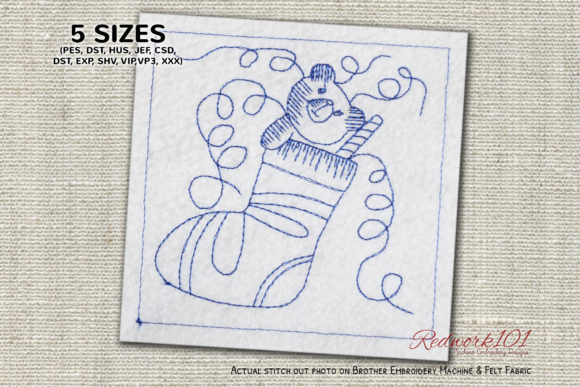
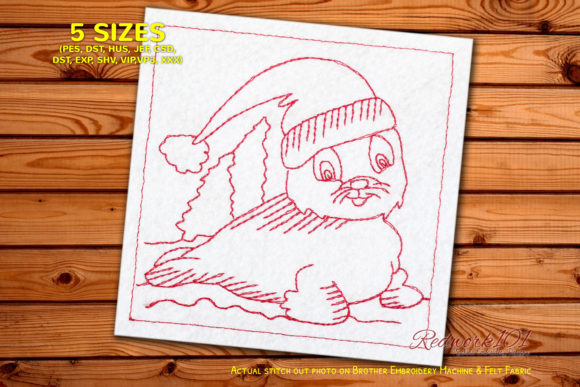
The Baby Seal with Christmas Hat Redwork design immediately presents a friendly, playful, and warmly handmade character. The “redwork” style—typically suggesting a simpler, outline-based approach—often conveys a classic, slightly rustic charm. This is not a harsh, corporate logo; it’s an emotive illustration. For a business, this means the design inherently feels approachable, personal, and suitable for customer-facing roles or merchandise aimed at building a community feel. It leans toward playful and handmade rather than ultra-modern or minimalist. This is a crucial first filter: does this visual personality align with your brand identity?
Practical Business Uses for This Embroidery File
Let’s move from impression to application. Where could a small business practically deploy this machine embroidery design? The key is thinking beyond decoration and considering it as a brand asset.
- Embroidered Patches: This design is a strong candidate for a standalone patch. Its likely outline-based nature can translate well to a patch edge. A boutique could sew these onto tote bags as a limited-edition holiday marker. A pet business might use it on staff aprons or as a product label accent.
- Staff Uniforms & Aprons: As a chest logo accent or sleeve detail on uniforms for a bakery, café, or florist, it adds a festive, friendly touch without overwhelming the garment. It signals a seasonal, celebratory team.
- Cap Embroidery: On the front of a cap, the design needs to be evaluated for size and detail. At smaller sizes, simpler designs perform better.
- Tote Bag Design: A single, well-placed embroidery on a canvas tote bag creates premium, handmade merchandise. This design could be a charming centerpiece for a small shop’s branded carrier.
- Customer Gifts & Event Merch: For holiday customer appreciation gifts or special event merchandise, this design on a handkerchief, tea towel, or pouch adds a personalized, crafted value.
- Digital Asset for Mockups: The embroidery file itself can be used in printable mockups for client approval or online marketing, showing the finished product on virtual apparel before physical production.
Critical Considerations for Professional Execution
Successful commercial embroidery relies on pre-production testing. Here are my practical designer notes for using Baby Seal with Christmas Hat Redwork in business projects.
- Test at Small Patch Size First: Before committing to a production run, hoop a small version (like 2 inches) to see if the details—especially the hat features and seal outline—remain clear and intact. Tiny lettering or overly dense areas can blur.
- Check Thread Color Contrast: The description notes the outer box stitch color may vary and can be skipped. This is vital. On dark uniforms (navy aprons, black caps), you must ensure the main design colors have sufficient contrast. Test it in high-contrast thread on your target fabric.
- Evaluate Stitch Density & Fabric: Assess the design’s stitch density. Higher density can be stiff on softer fabrics like cotton tees. For flexible items like caps or curved surfaces, a lighter density design is preferable. Always use the proper stabilizer for your specific fabric texture.
- Create a Physical Mockup for Client Approval: Never rely solely on the digital image. Embroider the design on a scrap of the actual garment fabric (twill for a cap, canvas for a tote, poly-cotton for a uniform) and present this sample. This reveals true texture, size, and color interaction.
- Confirm Commercial Licensing: As a business, you must verify the embroidery file’s license permits commercial embroidery use on products you sell or use for branding. Do not assume.
- Review Hoop Size Requirements: Understand the optimal hoop size for the design to maintain quality. A design forced into a too-small hoop may lose integrity.
Where to Use This Design Carefully
While versatile, some applications demand extra caution. The inherently illustrative nature of Baby Seal with Christmas Hat Redwork means it has specific strengths and limitations.
- Very Small Patch Sizes: If reduced below 1.5 inches, fine details may merge. Test thoroughly.
- Cap Fronts & Curved Surfaces: Complex curves can distort designs. Ensure the design’s layout is suitable for cap embroidery by consulting your digitizer or testing on a cap blank.
- Items Requiring Frequent Washing: On work shirts or aprons laundered aggressively, the durability of the embroidery depends on stitch structure and thread quality. A simpler redwork style can be robust if stitched well.
- As a Primary Logo: For most businesses, this is a seasonal accent, not a core brand logo. Use it to complement your existing visual identity for holiday campaigns, not replace it.
Impact on Brand Identity and Customer Perception
Integrating this design into your small business merch affects how customers perceive your brand. It can enhance customer trust by showing investment in quality, handmade details. On a uniform, it boosts professionalism through cohesive, intentional team branding. On a product, it increases perceived product value—an embroidered tote feels more premium than a blank one.
For a handmade brand or Etsy seller, using this design on your own packaging or aprons strengthens your handmade presentation, aligning your operational tools with your product ethos. It creates visual consistency across your holiday line. However, ensure it doesn’t clash with your existing brand colors or style; it should feel like a natural extension.
Ultimately, Baby Seal with Christmas Hat Redwork is a charming, seasonally-specific design asset. Its business value lies in its ability to inject festive warmth and crafted personality into your physical brand touchpoints. For the right business—one with a friendly, community-oriented, or pet-related identity—it can be a delightful addition to holiday uniforms and merchandise, driving engagement and reinforcing a thoughtful brand character.
Final Designer Advice
My core advice is process-driven. Always test first. Embroider the design in a single color (like black) on white and white on black fabric to evaluate its form without color influence. Compare it beside your other design assets to ensure visual harmony. And most importantly, communicate clearly with your embroidery partner or internal team about the intended use—patch, apparel, bag—so the digital embroidery file is set up and stabilized correctly from the start. With careful application, this design can become a profitable and brand-enhancing element of your holiday business strategy.